Vildagliptin × SScPTPortuguês

Can a diabetes drug quiet the cells that harden skin?

Vildagliptin blocks the enzyme DPP-4. In systemic sclerosis, DPP-4 marks the fibroblasts that bury skin in collagen. Over seven days, a hackathon team tested whether that overlap is worth a laboratory experiment.

Verdict Advance to a proof-of-mechanism experiment. Not a claim that it works in patients.

Cortellis Drug Repositioning Hackathon
August 2026, seven days
Evidence layers
seven, tested independently
Human skin cohorts
four public datasets
0%

Matrix deposition 100%

Schematic of the hypothesis, not data. Pink cells: DPP4⁺ fibroblasts. Pink strands: collagen.

Skin that keeps building

Systemic sclerosis (scleroderma) is an autoimmune disease in which dermal fibroblasts stay switched on. They lay down collagen and other extracellular matrix (ECM) until skin thickens and stiffens 1–3. Clinicians grade that thickening with the modified Rodnan skin score, mRSS, the standard skin endpoint in trials 1,4,5.

No therapy cures it. Current recommendations rely on immunosuppression and organ-specific treatment, with variable and often partial effects on skin 6–9. New agents are being tested, but the pipeline for skin fibrosis itself is thin 10,11.
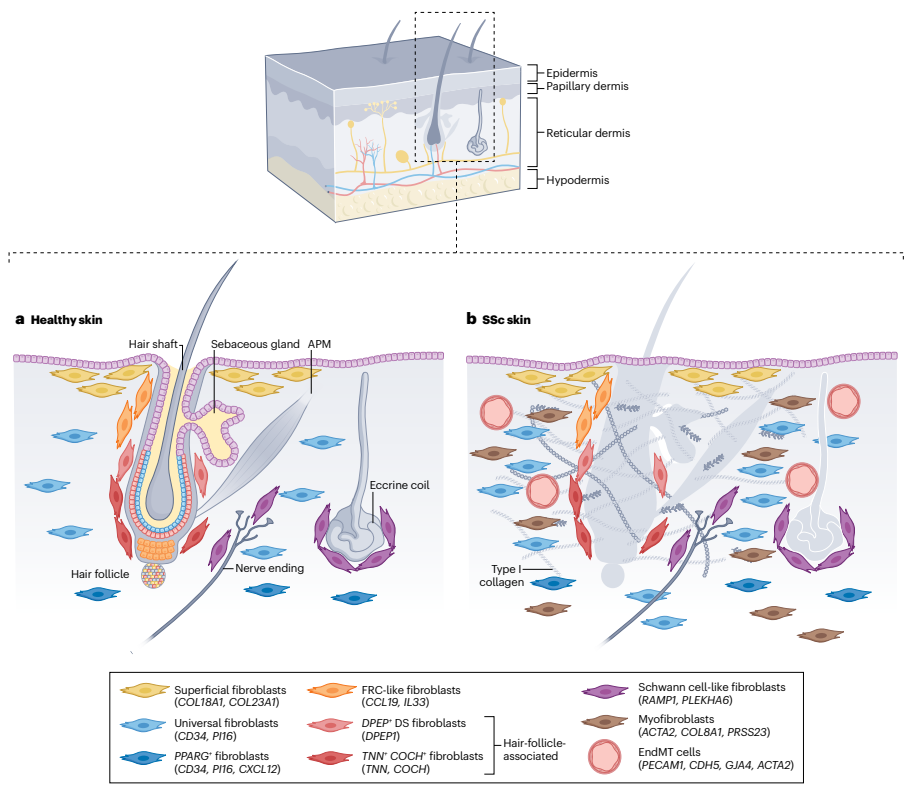

Illustrated cross-section of healthy and systemic sclerosis skin, showing fibroblast subtypes, myofibroblasts and type I collagen fibres.
Fibroblast populations in healthy and SSc skin. SSc skin gains myofibroblasts and loses adnexal structures as type I collagen accumulates. Reproduced from Distler et al. 1, Nat. Rev. Rheumatol. (2026).

The bet: a drug, a target, a cell

Repurposing works when an approved drug already hits a target that sits on the cells driving a disease. Here, each link of that chain has published support. Select a link to see it.

Vildagliptin is a potent, selective DPP-4/CD26 inhibitor with long clinical use 12,13. In a bleomycin model it reduced matrix, collagen and fibronectin deposition 14.

Show the original figureOriginal figure: The bet: a drug, a target, a cell
Drug
Vildagliptin: oral DPP-4 inhibitor approved for type 2 diabetes, with a long-term safety record.
Target
DPP-4/CD26 (ENSG00000197635), with enzymatic and non-enzymatic functions.
Disease
Systemic sclerosis, early diffuse cutaneous subtype: progressive dermal fibrosis.
Target cell
SFRP2⁺/DPP4⁺ dermal fibroblast, a myofibroblast progenitor 3.
Outcome
mRSS 4,5.
Development
No registered trial of any gliptin in systemic sclerosis, scleroderma or morphea 20.
Declared gap
No human-genetic support: DPP4 is not among the top Open Targets associations for SSc 21.
Decision gate
Continue only if the skin DPP4 signal is fibroblastic rather than lymphocytic.

The molecule

Vildagliptin binds DPP-4 at nanomolar potency 12,22. Its relatives DPP-8, DPP-9 and FAP sit one to three orders of magnitude further out, so at therapeutic exposure the drug is essentially a DPP-4 tool 22. It was chosen over other gliptins because it combines DPP-4-targeted antifibrotic evidence, oral dosing, established human pharmacology and immediate feasibility 13,14.

Selectivity, on one log scale

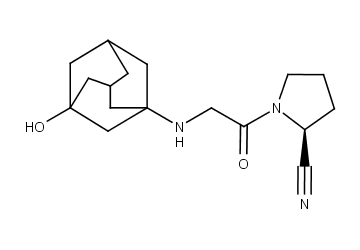
Skeletal formula of vildagliptin: a hydroxyadamantyl amine joined through a glycyl linker to a cyanopyrrolidine.
Vildagliptin, C₁₇H₂₅N₃O₂.
IC₅₀ in nM. DPP-4: median of 68 in-vitro measurements. Drag the marker to set an exposure and see which enzymes it would block by half. Source: Cortellis 22.

What was already known

The biology was not new. Seven bodies of work pointed the same way before the hackathon began. What was missing was a test of the whole chain in human skin data.

  • Patient skinDPP-4 marks activated fibroblasts in SSc lesions 15.
  • Human fibroblastsInhibiting or depleting DPP-4 lowers matrix synthesis 15,23.
  • BiochemistrySoluble DPP-4 activates fibroblasts through PAR-2 and NF-κB/SMAD 23; DPP-4 processing of fibronectin builds a profibrotic matrix 24.
  • Animal modelsGliptins reduce fibrosis; linagliptin did so in the lungs of an SSc mouse model 14,25.
  • Skin and scarsDPP-4 and urokinase are key molecules in human and mouse scarring 26; DPP-4 inhibition reactivates hair follicles 27; sitagliptin microneedles prevent scars by turning fibroblasts into adipocytes 28, the reverse of the TGFβ-driven block that promotes skin fibrosis 29.
  • EpidemiologyIn 5,430 diabetic patients after sternotomy in Japan, DPP-4 inhibitor use was associated with fewer hypertrophic scars and keloids 30, a finding later discussed in the same journal 31.
  • Patient transcriptomesLarge skin gene-expression cohorts let fibrotic programs be tested against mRSS directly 32–35.
  • Other organsDPP-4 is an antifibrotic target in lung, liver and kidney models 36.
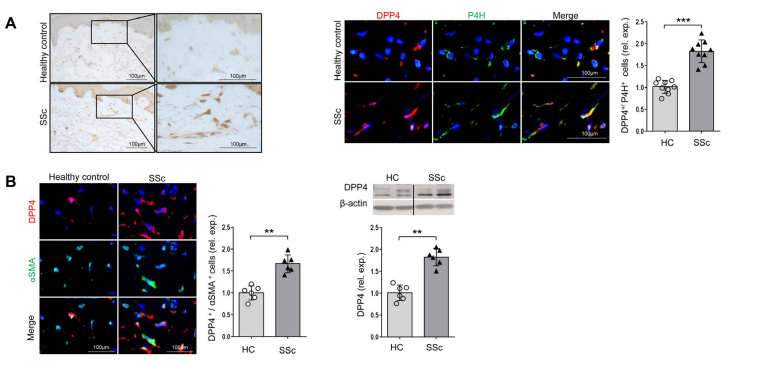
Immunohistochemistry and immunofluorescence panels from SSc and healthy skin, with bar charts showing more DPP4⁺ P4H⁺ and DPP4⁺ αSMA⁺ cells in SSc.
DPP4⁺ fibroblasts are increased in SSc skin and co-express the myofibroblast marker αSMA. Reproduced from Soare et al. 15, Arthritis Rheumatol. (2020).

Seven layers, each able to say no

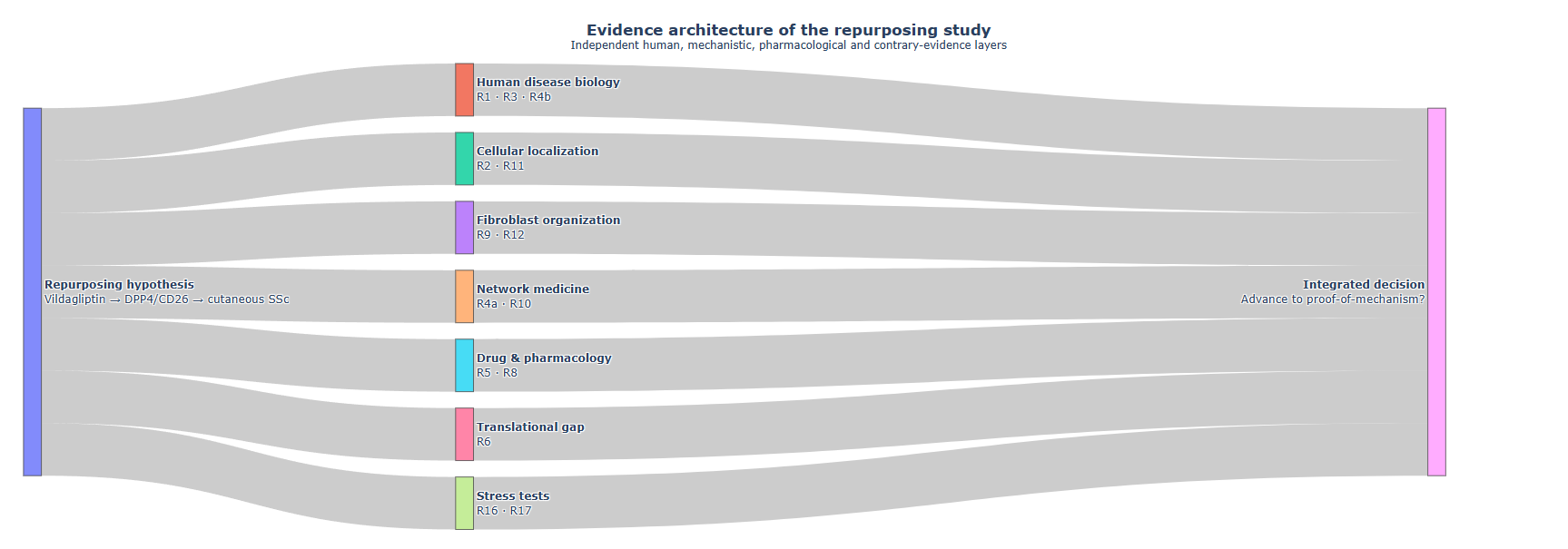
The analysis ran on a computing cluster and was assembled into one notebook. Each layer used different data and could fail on its own. Select a layer to jump to its result.

Show the original figureOriginal figure: Seven layers, each able to say no

Supports

Is the fibrotic process present in patient skin?

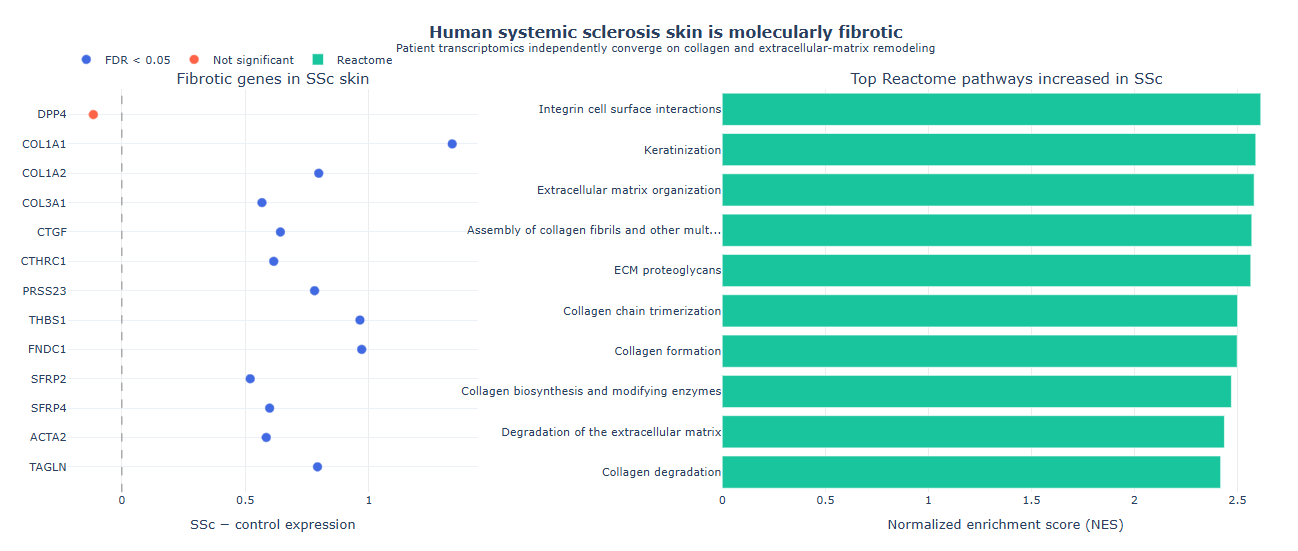
Bulk skin transcriptomes, SSc vs control 37. Differential expression of 13 pre-specified fibrosis genes and Reactome gene-set enrichment 38.

Show the original figureOriginal figure: Is the fibrotic process present in patient skin?

Yes, strongly. Collagens, THBS1, PRSS23 and the myofibroblast genes ACTA2 and TAGLN are all up, and the top ten enriched pathways are matrix and collagen programs. DPP4 itself is not increased. If DPP-4 matters, it matters in a particular cell state, not across the tissue.

Supports

If DPP4 is not up overall, which cells carry it?

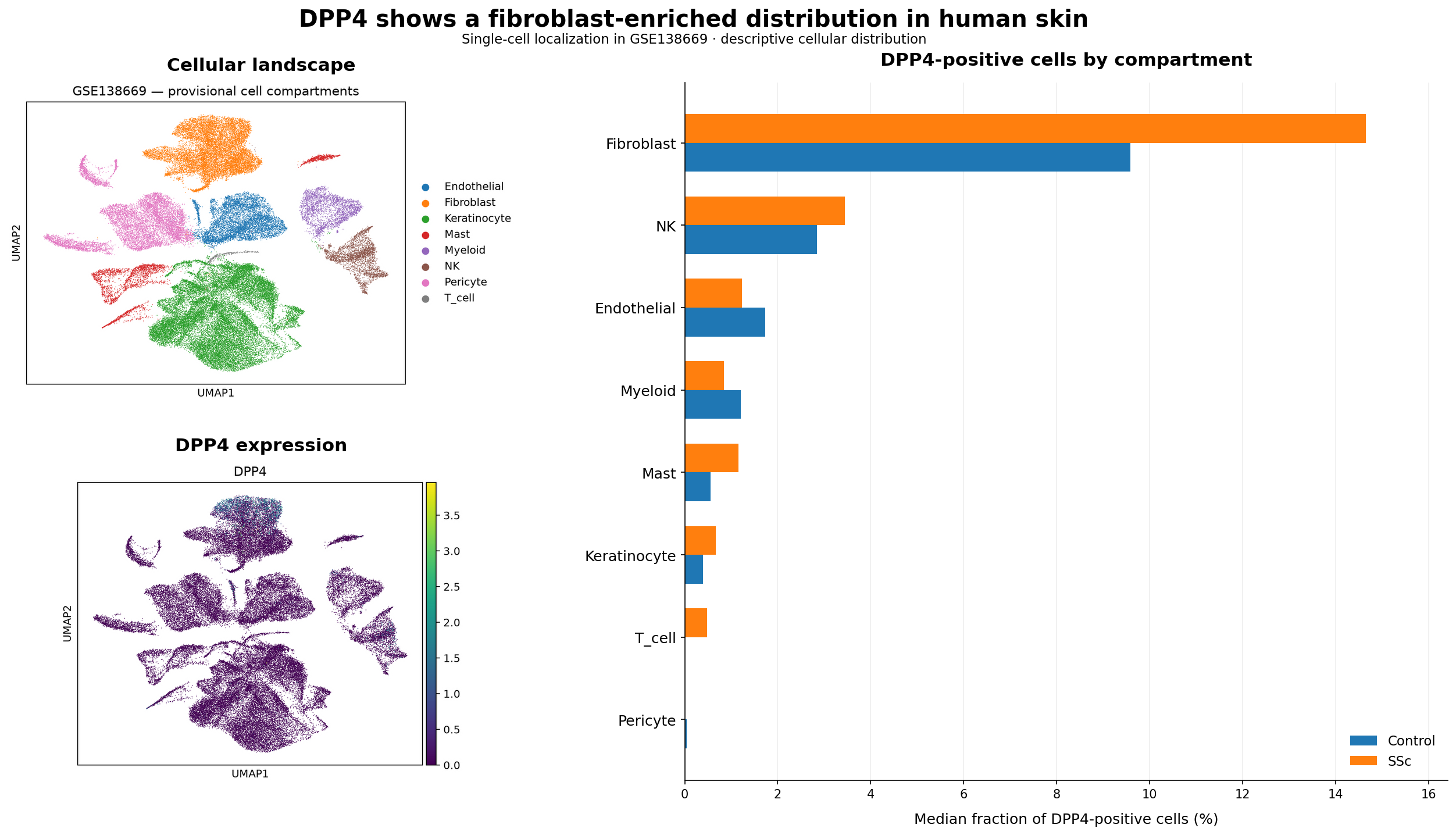
Single-cell RNA-seq of SSc and healthy skin 39, analysed with Scanpy and Harmony 40,41.

Show the original figureOriginal figure: If DPP4 is not up overall, which cells carry it?

Fibroblasts, by a wide margin. DPP4-positive fibroblasts reach a median of about 15% in SSc against about 10% in controls; no other compartment passes 4%. This passes the decision gate: the skin DPP4 signal is fibroblastic, not lymphocytic.

Supports

Does an independent cohort agree?

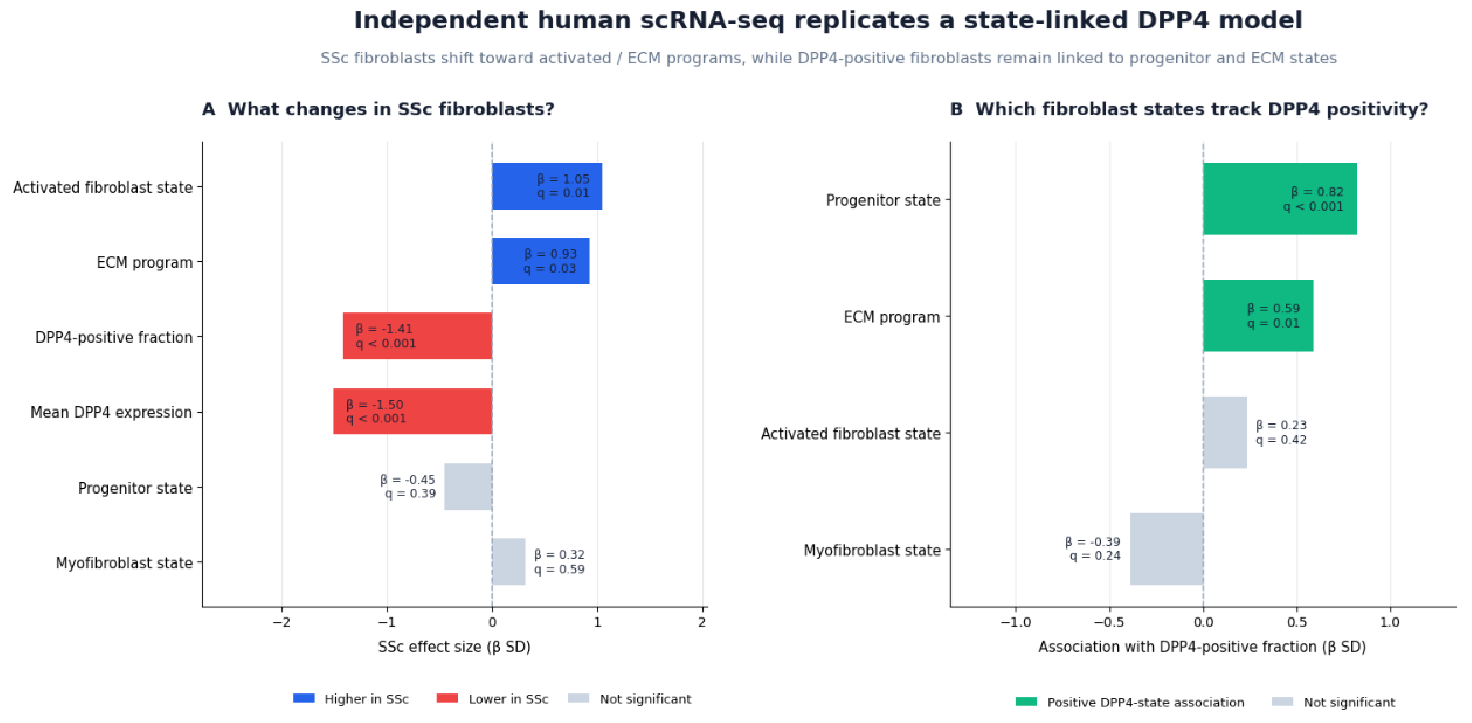
A second single-cell skin cohort 42. Donor-level state scores, robust regression; β in standard deviations, q after Benjamini–Hochberg correction.

Show the original figureOriginal figure: Does an independent cohort agree?

Partly, and the disagreement is informative. SSc fibroblasts shift toward activated and ECM programs, while the DPP4-positive fraction is lower in this cohort. Within donors, DPP4 positivity still tracks the progenitor (β = 0.82) and ECM (β = 0.59) states. DPP4 marks a state, not a quantity that rises with disease.

Refines the model

One road to fibrosis, or several?

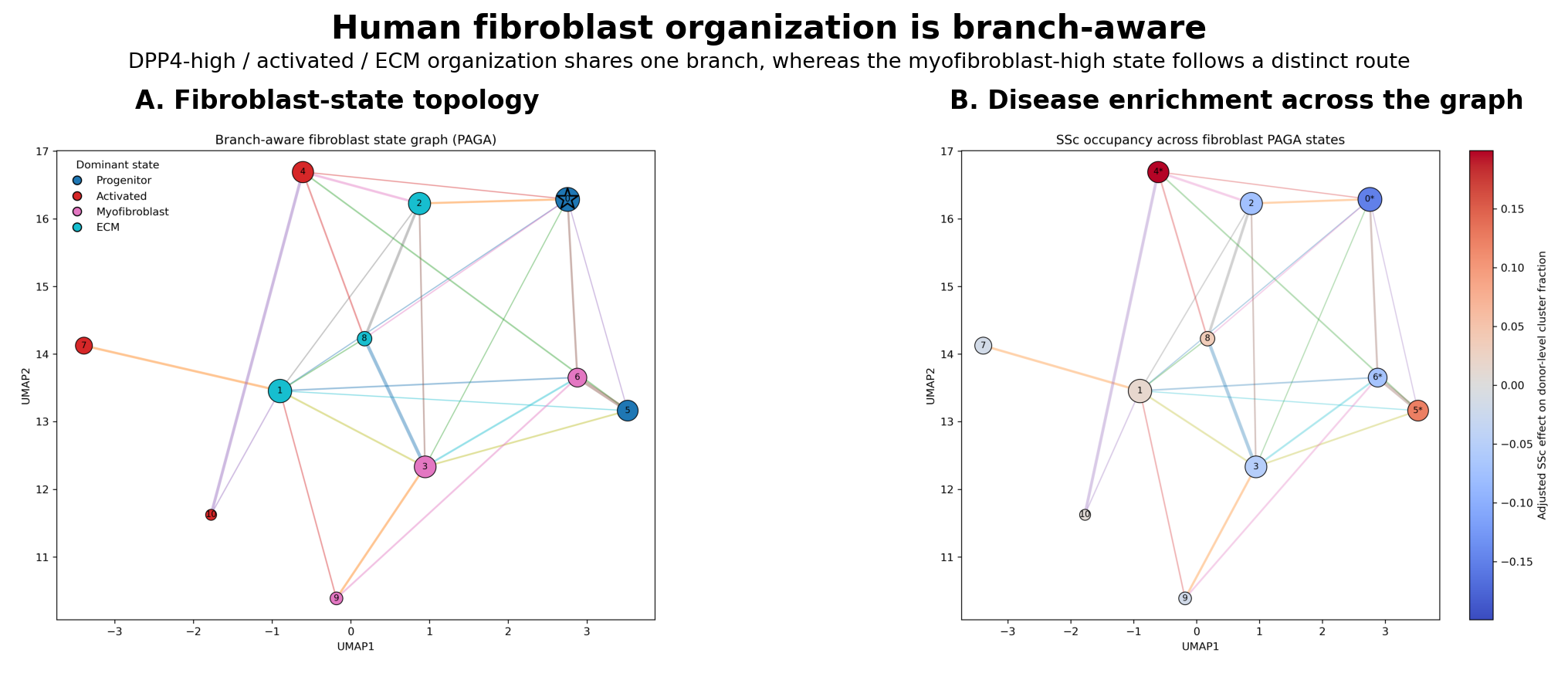
Fibroblast graph reconstruction with PAGA 43 on 39; node colour is the adjusted SSc effect on donor-level occupancy.

Show the original figureOriginal figure: One road to fibrosis, or several?

Several. DPP4-high, activated and ECM states share one branch (0 → 2 → 4). The myofibroblast-high state follows a partly separate route (0 → 6 → 9). SSc enriches selected states rather than inflating the whole graph. PAGA shows connectivity, not lineage direction.

Refines the model

Are DPP4⁺ fibroblasts the most profibrotic signalling state?

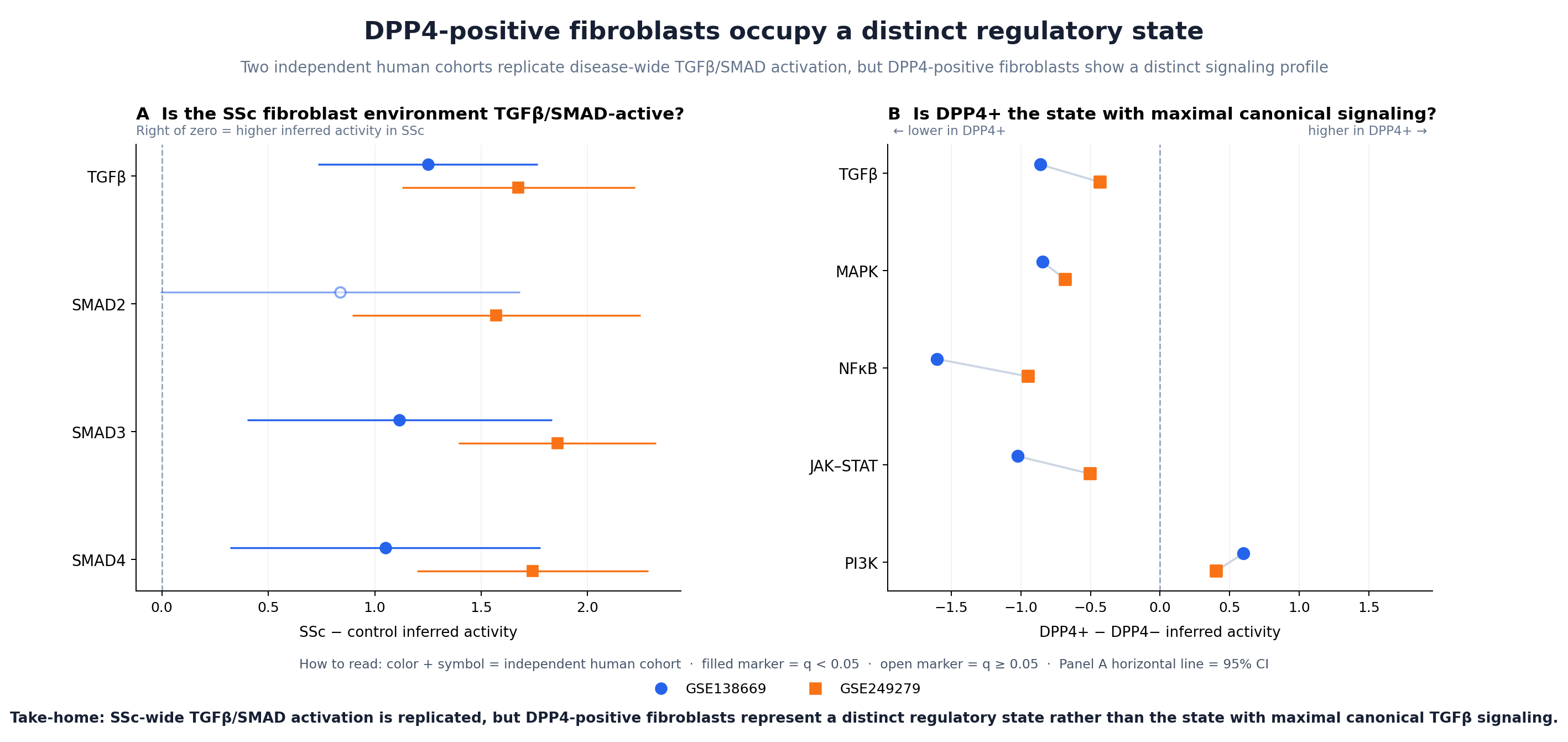
Fibroblast pseudobulk from two cohorts 39,42. Pathway and transcription-factor activity with decoupler 44, PROGENy 45 and CollecTRI 46.

Show the original figureOriginal figure: Are DPP4⁺ fibroblasts the most profibrotic signalling state?

No. Both cohorts replicate a TGFβ/SMAD-active disease environment. But DPP4⁺ fibroblasts show lower TGFβ, MAPK, NF-κB and JAK–STAT activity than DPP4⁻ cells, and higher PI3K. They sit in a distinct, quieter regulatory state, consistent with progenitors rather than effectors.

Supports

Is DPP4 close to the disease in the protein network?

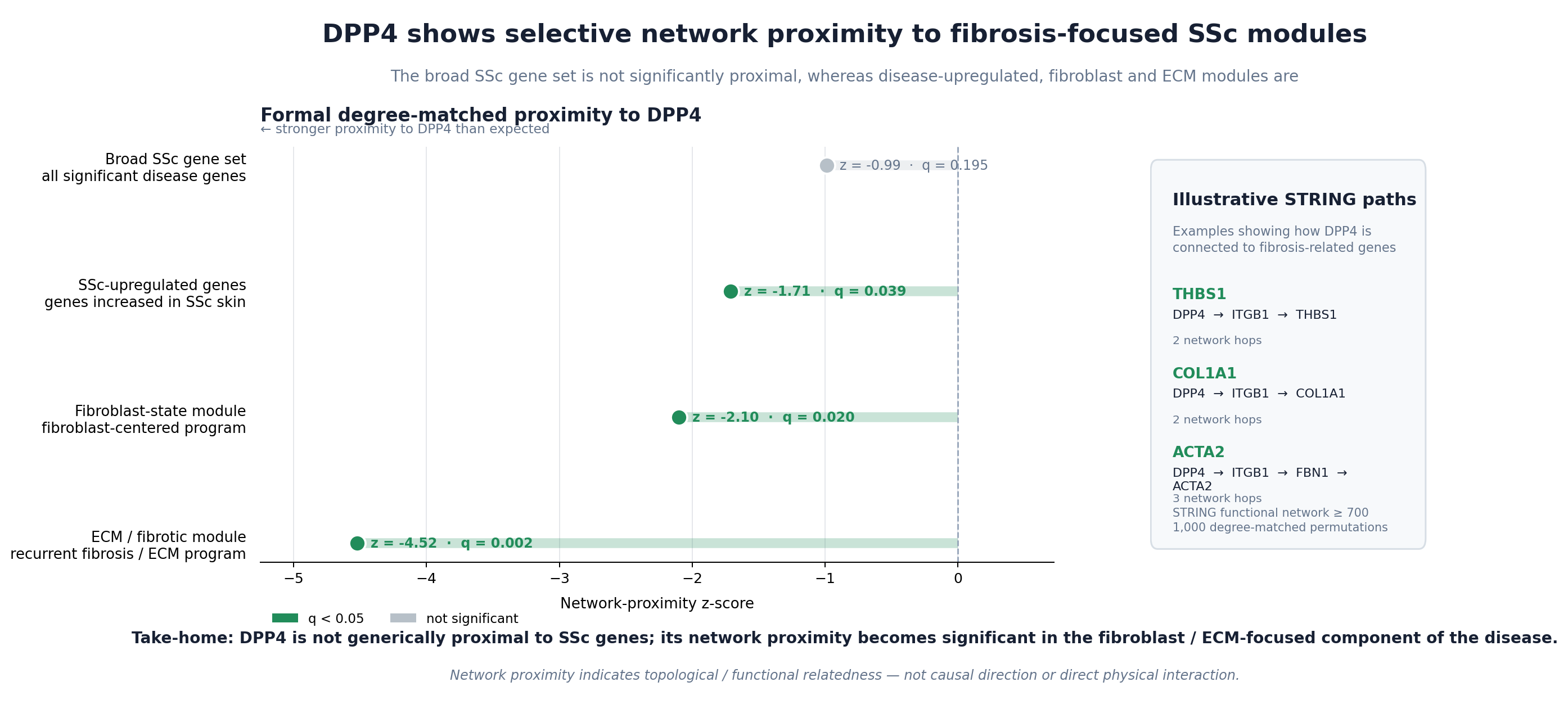
STRING v12 functional network, confidence ≥ 700 47; network proximity against 1,000 degree-matched random gene sets 48.

Show the original figureOriginal figure: Is DPP4 close to the disease in the protein network?

Close to its fibrotic core, not to the disease as a whole. Proximity is not significant for the broad SSc gene set (z = −0.99) and grows toward the ECM module (z = −4.52, q = 0.002). That selectivity is what a downstream antifibrotic target should look like.

Supports

Do these programs track how sick the skin is?

Skin transcriptomes with baseline mRSS 49; Spearman correlation, then covariate-adjusted models.

Show the original figureOriginal figure: Do these programs track how sick the skin is?

The downstream programs do: activated (ρ = 0.70), myofibroblast (0.69) and ECM (0.55) survive adjustment. DPP4 itself does not (ρ = −0.21). It is a handle on the upstream state, not a severity biomarker.

Supports

Can a normal dose reach DPP-4 in skin?

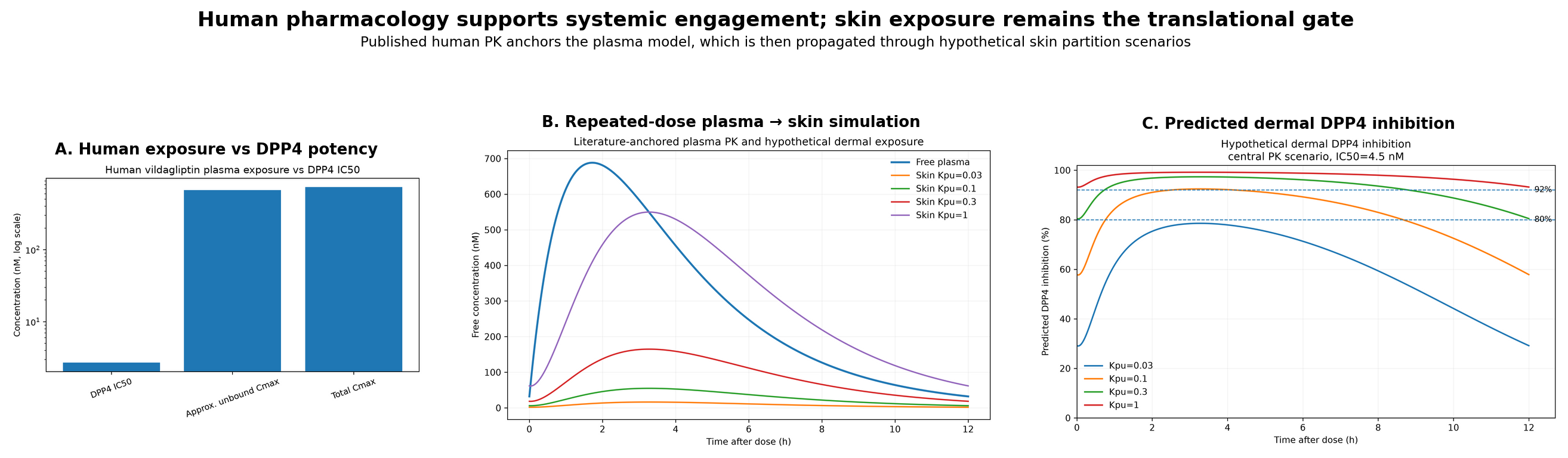
50 mg twice daily. Plasma anchored to published human pharmacokinetics; skin modelled as a partition sensitivity analysis (Kpu = skin/plasma ratio). Not measured skin data. The explorer below re-implements the model and reproduces the study’s threshold table.

Show the original figureOriginal figure: Can a normal dose reach DPP-4 in skin?

Systemically, comfortably: free plasma levels sit far above the DPP-4 IC₅₀. In skin, it depends on one number nobody has measured. Keeping ≥ 80% inhibition for half of each dosing interval needs Kpu ≥ 0.10; keeping ≥ 92% for 80% of it needs Kpu ≥ 0.50. Skin exposure is the gate an experiment can open.

Supports

Is someone already doing this?

PubMed, ClinicalTrials.gov 20 and a manual Cortellis review 22.

Not in the records reviewed. The preclinical case for DPP-4 in SSc dates to 2020 15,36, yet no interventional trial of vildagliptin or any gliptin for SSc skin fibrosis was found. The opportunity is translational, not biological novelty.

What the data refused

A hypothesis that survives every test was probably not tested hard enough. These results narrowed the model; they are reported with the same weight as the support.

  1. DPP4 is not globally increased

    Not in bulk skin, and lower in one single-cell cohort. The model had to move from "more DPP-4" to "a DPP-4-marked state".

  2. DPP4 is not a severity marker

    ρ = −0.21 with mRSS. Its value is as a handle on progenitors, not as a readout.

  3. No single linear trajectory

    Myofibroblasts can be reached by a route that bypasses the DPP4-high branch. Inhibiting DPP-4 may slow one road, not close all of them.

  4. Not the most profibrotic state

    DPP4⁺ fibroblasts have lower canonical TGFβ, MAPK, NF-κB and JAK–STAT activity than DPP4⁻ cells.

  5. No transcriptomic reversal

    In LINCS/L1000 50,51, neither vildagliptin nor DPP4 knockout or knockdown reproducibly reversed three human SSc signatures.

  6. No human-genetic support

    No GWAS hit, locus association or skin/fibroblast eQTL linking DPP4 to SSc 21,52,53. Vildagliptin would act on a downstream effector, not on a cause; drug effects tend to sit in the network neighbourhood of disease genes 48.

  7. Preclinical is not clinical

    Efficacy in models does not guarantee benefit in heterogeneous human SSc 3,36.

  8. Not only DPP-4

    At higher concentrations vildagliptin also inhibits DPP-8, DPP-9 and FAP, and its exposure in fibrotic skin is unknown 22.

Every result, by its role in the decision

Position shows each result’s role in the decision, not the strength of its evidence. Hover or focus a mark for the finding.

Verdict

Advance vildagliptin to a disease-relevant proof-of-mechanism experiment. This is not a clinical efficacy claim.

Human SSc data define a reproducible fibroblast and ECM context for DPP4. Downstream fibrotic programs track mRSS. Experimental perturbation provides causal antifibrotic support 15, and human pharmacology supports systemic target engagement 13.

Dermal pharmacology is partly de-risked: the skin exposure required has been quantified, but actual exposure and target engagement in SSc skin remain unmeasured.

The safety profile is established. Liver function, pancreatitis and skin reactions need monitoring. DPP-4 inhibition does not appear to impair wound healing: in a randomised, placebo-controlled trial in diabetic foot ulcers, vildagliptin was associated with better healing 54.

The experiment that decides it

Designed, not yet performed. Primary dermal fibroblasts from SSc lesions and healthy donors, with and without TGFβ1. The design separates a failed drug from a failed target.

Arms

  1. Vehicle
  2. Vildagliptin at exposure-informed concentrations
  3. DPP4 knockdown
  4. Knockdown + vildagliptin
  5. Nintedanib (positive control)

Readouts

  • Target engagement DPP4 enzyme activity
  • Activated fibroblast PRSS23 · THBS1
  • Myofibroblast ACTA2 · TAGLN
  • Matrix output COL1A1 · soluble collagen
  • Function matrix contraction

Pick the result of each arm

DPP4 knockdown suppresses the phenotype
Vildagliptin suppresses the phenotype

My part

This was a team project: five people, seven days, at the Cortellis Drug Repositioning Hackathon (Clarivate and Hospital Israelita Albert Einstein, with InovaUSP). I co-led the computational analysis, from the single-cell and network work to the pharmacology model and the evidence notebook, and presented the proposal and its business case.

The analyses ran on an HPC cluster with Slurm. The public repository holds the notebook that loads the frozen results, checks every file against its SHA-256 hash and renders the figures. The pipeline itself is not public.

Methods and tools

  • Python
  • Scanpy · AnnData
  • Harmony
  • PAGA
  • decoupler · PROGENy · CollecTRI
  • STRING v12 · NetworkX
  • statsmodels · SciPy
  • PK/PD modelling
  • Plotly · Matplotlib
  • Slurm HPC

References

Numbered by first appearance. Literature verified against PubMed. Data sources accessed in August 2026.

  1. Distler, J. H. W. et al. Mechanisms of fibrotic tissue remodelling: insights from systemic sclerosis. Nat. Rev. Rheumatol. 22, 221-238 (2026).doi:10.1038/s41584-025-01349-zPMID 41588245
  2. Rinkevich, Y. et al. Skin fibrosis. Identification and isolation of a dermal lineage with intrinsic fibrogenic potential. Science 348, aaa2151 (2015).doi:10.1126/science.aaa2151PMID 25883361
  3. Tabib, T. et al. Myofibroblast transcriptome indicates SFRP2hi fibroblast progenitors in systemic sclerosis skin. Nat. Commun. 12, 4384 (2021).doi:10.1038/s41467-021-24607-6PMID 34282151
  4. Desai, R., Chawla, H., Larin, K. & Assassi, S. Methods for objective assessment of skin involvement in systemic sclerosis. Curr. Opin. Rheumatol. 35, 301-308 (2023).doi:10.1097/BOR.0000000000000968PMID 37605869
  5. Kumánovics, G. et al. Assessment of skin involvement in systemic sclerosis. Rheumatology (Oxford) 56, v53-v66 (2017).doi:10.1093/rheumatology/kex202PMID 28992173
  6. Del Galdo, F. et al. EULAR recommendations for the treatment of systemic sclerosis: 2023 update. Ann. Rheum. Dis. 84, 29-40 (2025).doi:10.1136/ard-2024-226430PMID 39874231
  7. Kowal-Bielecka, O. et al. Update of EULAR recommendations for the treatment of systemic sclerosis. Ann. Rheum. Dis. 76, 1327-1339 (2016).doi:10.1136/annrheumdis-2016-209909PMID 27941129
  8. Pellar, R. E. & Pope, J. E. Evidence-based management of systemic sclerosis: Navigating recommendations and guidelines. Semin. Arthritis Rheum. 46, 767-774 (2016).doi:10.1016/j.semarthrit.2016.12.003PMID 28088339
  9. Pavlov-Dolijanovic, S. et al. Rheumatologists' Adherence to EULAR Recommendations for Systemic Sclerosis Treatment: Experience of a Single Center in Serbia. J. Clin. Med. 14, 4994 (2025).doi:10.3390/jcm14144994PMID 40725689
  10. Sieiro Santos, C. & Del Galdo, F. New horizons in systemic sclerosis treatment: advances and emerging therapies in 2025. RMD Open 11, e005776 (2025).doi:10.1136/rmdopen-2025-005776PMID 40592721
  11. Khanna, D. et al. A randomised, parallel-group, double-blind, placebo-controlled phase 3 study to Determine the effectiveness of the type I interferon receptor antibody, Anifrolumab, In SYstemic sclerosis: DAISY study design and rationale. Clin. Exp. Rheumatol. 42, 1635-1644 (2024).doi:10.55563/clinexprheumatol/s8qcyuPMID 39152751
  12. Brandt, I. et al. Inhibition of dipeptidyl-peptidase IV catalyzed peptide truncation by Vildagliptin ((2S)-{[(3-hydroxyadamantan-1-yl)amino]acetyl}-pyrrolidine-2-carbonitrile). Biochem. Pharmacol. 70, 134-43 (2005).doi:10.1016/j.bcp.2005.04.009PMID 15907807
  13. Ahrén, B. et al. Mechanisms of action of the dipeptidyl peptidase-4 inhibitor vildagliptin in humans. Diabetes Obes. Metab. 13, 775-83 (2011).doi:10.1111/j.1463-1326.2011.01414.xPMID 21507182
  14. Liu, Y. & Qi, Y. Vildagliptin, a CD26/DPP4 inhibitor, ameliorates bleomycin-induced pulmonary fibrosis via regulating the extracellular matrix. Int. Immunopharmacol. 87, 106774 (2020).doi:10.1016/j.intimp.2020.106774PMID 32731178
  15. Soare, A. et al. Dipeptidylpeptidase 4 as a Marker of Activated Fibroblasts and a Potential Target for the Treatment of Fibrosis in Systemic Sclerosis. Arthritis Rheumatol. 72, 137-149 (2020).doi:10.1002/art.41058PMID 31350829
  16. Sinnathurai, P. et al. Circulating fibroblast activation protein and dipeptidyl peptidase 4 in rheumatoid arthritis and systemic sclerosis. Int. J. Rheum. Dis. 21, 1915-1923 (2016).doi:10.1111/1756-185X.13031PMID 27990763
  17. Deng, C. C. et al. Single-cell RNA-seq reveals fibroblast heterogeneity and increased mesenchymal fibroblasts in human fibrotic skin diseases. Nat. Commun. 12, 3709 (2021).doi:10.1038/s41467-021-24110-yPMID 34140509
  18. Low, A. H. L. et al. Evaluation of Scleroderma Clinical Trials Consortium training recommendations on modified Rodnan skin score assessment in scleroderma. Int. J. Rheum. Dis. 22, 1036-1040 (2019).doi:10.1111/1756-185X.13523PMID 30838791
  19. Khanna, D., Huang, S., Lin, C. J. F. & Spino, C. New composite endpoint in early diffuse cutaneous systemic sclerosis: revisiting the provisional American College of Rheumatology Composite Response Index in Systemic Sclerosis. Ann. Rheum. Dis. 80, 641-650 (2020).doi:10.1136/annrheumdis-2020-219100PMID 33257497
  20. ClinicalTrials.gov API v2, query dated 29 August 2026 (gliptins × systemic sclerosis, scleroderma, morphea). (2026).clinicaltrials.gov/data-api/api
  21. Open Targets Platform. (accessed 2026).platform.opentargets.org
  22. Cortellis Drug Discovery Intelligence (Clarivate): vildagliptin pharmacology record (DPP-4 IC50 median of 68 in vitro measurements; off-target potencies), reviewed manually August 2026. (2026).clarivate.com/cortellis
  23. Lee, S. Y. et al. Soluble Dipeptidyl Peptidase-4 Induces Fibroblast Activation Through Proteinase-Activated Receptor-2. Front. Pharmacol. 11, 552818 (2020).doi:10.3389/fphar.2020.552818PMID 33117158
  24. Zeyer, K. A. et al. Dipeptidyl Peptidase-4-Mediated Fibronectin Processing Evokes a Profibrotic Extracellular Matrix. J. Invest. Dermatol. 144, 2477-2487.e13 (2024).doi:10.1016/j.jid.2024.03.020PMID 38570029
  25. Pei, B., Zhang, N., Pang, T. & Sun, G. Linagliptin ameliorates pulmonary fibrosis in systemic sclerosis mouse model via inhibition of endothelial-to-mesenchymal transition. Mol. Cell. Biochem. 477, 995-1007 (2022).doi:10.1007/s11010-021-04349-1PMID 34988855
  26. Vorstandlechner, V. et al. The serine proteases dipeptidyl-peptidase 4 and urokinase are key molecules in human and mouse scar formation. Nat. Commun. 12, 6242 (2021).doi:10.1038/s41467-021-26495-2PMID 34716325
  27. Helm, M. et al. Repurposing DPP4 Inhibition to Improve Hair Follicle Activation and Regeneration. J. Invest. Dermatol. 143, 2132-2144.e15 (2023).doi:10.1016/j.jid.2023.04.027PMID 37236597
  28. Zhang, J. L. et al. Sustained-Release Sitagliptin Microneedles for Scar Prevention via Fibroblast-to-Adipocyte Conversion. Small Sci. 5, e202500140 (2025).doi:10.1002/smsc.202500140PMID 41395508
  29. Yin, M. et al. TGFβ-mediated inhibition of hypodermal adipocyte progenitor differentiation promotes wound-induced skin fibrosis. Cell Prolif. 58, e13722 (2024).doi:10.1111/cpr.13722PMID 39072821
  30. Suwanai, H., Watanabe, R., Sato, M., Odawara, M. & Matsumura, H. Dipeptidyl Peptidase-4 Inhibitor Reduces the Risk of Developing Hypertrophic Scars and Keloids following Median Sternotomy in Diabetic Patients: A Nationwide Retrospective Cohort Study Using the National Database of Health Insurance Claims of Japan. Plast. Reconstr. Surg. 146, 83-89 (2020).doi:10.1097/PRS.0000000000006904PMID 32590649
  31. Wang, P. et al. Dipeptidyl Peptidase-4 Inhibitor Reduces the Risk of Developing Hypertrophic Scars and Keloids following Median Sternotomy in Diabetic Patients: A Nationwide Retrospective Cohort Study Using the National Database of Health Insurance Claims of Japan. Plast. Reconstr. Surg. 147, 1067e-1068e (2021).doi:10.1097/PRS.0000000000007935PMID 33961605Letter/comment on Suwanai et al. 2020 (same title).
  32. Assassi, S. et al. Skin gene expression correlates of severity of interstitial lung disease in systemic sclerosis. Arthritis Rheum. 65, 2917-27 (2013).doi:10.1002/art.38101PMID 23897225
  33. Skaug, B. et al. Global skin gene expression analysis of early diffuse cutaneous systemic sclerosis shows a prominent innate and adaptive inflammatory profile. Ann. Rheum. Dis. 79, 379-386 (2019).doi:10.1136/annrheumdis-2019-215894PMID 31767698
  34. Skaug, B. et al. Large-scale analysis of longitudinal skin gene expression in systemic sclerosis reveals relationships of immune cell and fibroblast activity with skin thickness and a trend towards normalisation over time. Ann. Rheum. Dis. 81, 516-523 (2021).doi:10.1136/annrheumdis-2021-221352PMID 34937693
  35. Clark, K. E. N. et al. Integrated analysis of dermal blister fluid proteomics and genome-wide skin gene expression in systemic sclerosis: an observational study. Lancet Rheumatol. 4, e507-e516 (2022).doi:10.1016/S2665-9913(22)00094-7PMID 36404995
  36. Ohm, B., Moneke, I. & Jungraithmayr, W. Targeting cluster of differentiation 26 / dipeptidyl peptidase 4 (CD26/DPP4) in organ fibrosis. Br. J. Pharmacol. 180, 2846-2861 (2022).doi:10.1111/bph.15967PMID 36196001
  37. NCBI Gene Expression Omnibus GSE58095: skin gene expression in systemic sclerosis (bulk). (accessed 2026).www.ncbi.nlm.nih.gov/geo/query/acc.cgi?acc=GSE58095
  38. Reactome pathway knowledgebase. (accessed 2026).reactome.org
  39. NCBI Gene Expression Omnibus GSE138669: single-cell RNA-seq of systemic sclerosis and healthy skin. (accessed 2026).www.ncbi.nlm.nih.gov/geo/query/acc.cgi?acc=GSE138669
  40. Wolf, F. A., Angerer, P. & Theis, F. J. SCANPY: large-scale single-cell gene expression data analysis. Genome Biol. 19, 15 (2018).doi:10.1186/s13059-017-1382-0PMID 29409532
  41. Korsunsky, I. et al. Fast, sensitive and accurate integration of single-cell data with Harmony. Nat. Methods 16, 1289-1296 (2019).doi:10.1038/s41592-019-0619-0PMID 31740819
  42. NCBI Gene Expression Omnibus GSE249279: single-cell RNA-seq of systemic sclerosis skin (independent cohort). (accessed 2026).www.ncbi.nlm.nih.gov/geo/query/acc.cgi?acc=GSE249279
  43. Wolf, F. A. et al. PAGA: graph abstraction reconciles clustering with trajectory inference through a topology preserving map of single cells. Genome Biol. 20, 59 (2019).doi:10.1186/s13059-019-1663-xPMID 30890159
  44. Badia-I-Mompel, P. et al. decoupleR: ensemble of computational methods to infer biological activities from omics data. Bioinform. Adv. 2, vbac016 (2022).doi:10.1093/bioadv/vbac016PMID 36699385
  45. Schubert, M. et al. Perturbation-response genes reveal signaling footprints in cancer gene expression. Nat. Commun. 9, 20 (2018).doi:10.1038/s41467-017-02391-6PMID 29295995
  46. Müller-Dott, S. et al. Expanding the coverage of regulons from high-confidence prior knowledge for accurate estimation of transcription factor activities. Nucleic Acids Res. 51, 10934-10949 (2023).doi:10.1093/nar/gkad841PMID 37843125
  47. Szklarczyk, D. et al. The STRING database in 2023: protein-protein association networks and functional enrichment analyses for any sequenced genome of interest. Nucleic Acids Res. 51, D638-D646 (2023).doi:10.1093/nar/gkac1000PMID 36370105
  48. Guney, E., Menche, J., Vidal, M. & Barábasi, A. L. Network-based in silico drug efficacy screening. Nat. Commun. 7, 10331 (2016).doi:10.1038/ncomms10331PMID 26831545
  49. NCBI Gene Expression Omnibus GSE181549: skin gene expression with baseline mRSS in systemic sclerosis. (accessed 2026).www.ncbi.nlm.nih.gov/geo/query/acc.cgi?acc=GSE181549
  50. Subramanian, A. et al. A Next Generation Connectivity Map: L1000 Platform and the First 1,000,000 Profiles. Cell 171, 1437-1452.e17 (2017).doi:10.1016/j.cell.2017.10.049PMID 29195078
  51. SigCom LINCS: LINCS L1000 signature search. (accessed 2026).maayanlab.cloud/sigcom-lincs
  52. NHGRI-EBI GWAS Catalog. (accessed 2026).www.ebi.ac.uk/gwas
  53. GTEx Portal. (accessed 2026).gtexportal.org
  54. Vangaveti, V. N. et al. Effects of vildagliptin on wound healing and markers of inflammation in patients with type 2 diabetic foot ulcer: a prospective, randomized, double-blind, placebo-controlled, single-center study. Diabetol. Metab. Syndr. 14, 183 (2022).doi:10.1186/s13098-022-00938-2PMID 36456992